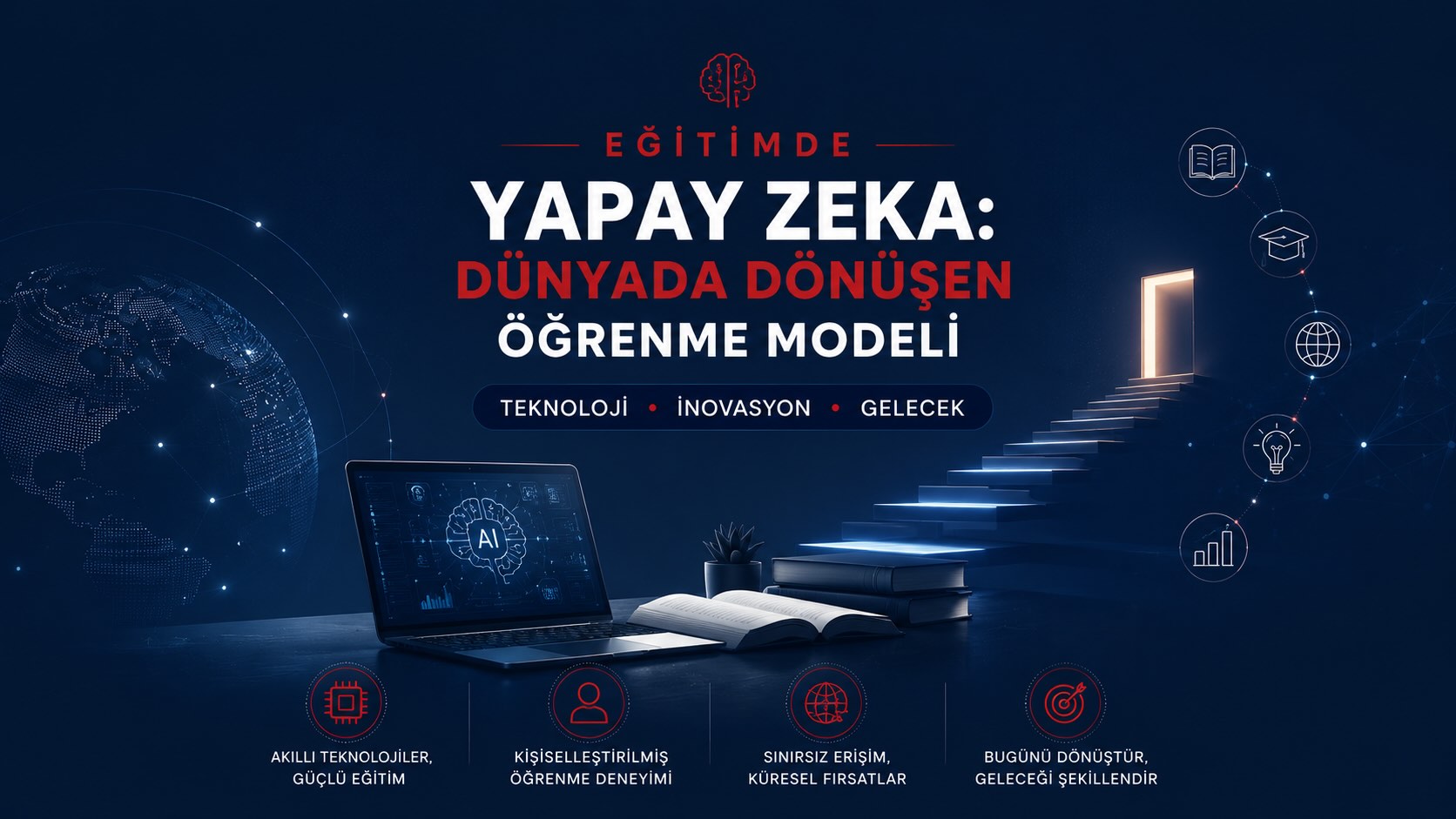
Eğitimde Yapay Zeka: Dünyada Dönüşen Öğrenme Modeli
Yapay zeka, dünya genelinde eğitimin nasıl tasarlandığını, sunulduğunu ve ölçüldüğünü kökten değiştiriyor. Kişiselleştirilmiş öğrenmeden akıllı kariyer yönlendirmesine, küresel tabloyu inceliyoruz.
Geleneksel sınıf modelinin en büyük kısıtı, ortalama öğrenciye göre tasarlanmış olmasıdır. Yapay zeka destekli adaptif öğrenme platformları bu kısıtı ortadan kaldırıyor. Sistem, öğrencinin verdiği yanıtları, harcadığı süreyi ve hata örüntülerini gerçek zamanlı analiz ederek içeriği anında yeniden düzenliyor. Zorlandığı konuya ek kaynak sunuyor, hızlı ilerlediği yerde ileri seviye içeriğe geçiriyor.
Kişiselleştirmenin üç temel bileşeni
- Öğrencinin mevcut bilgi düzeyini ve eksiklerini hassas biçimde tespit etme.
- İçeriği, zorluğu ve tempoyu öğrenciye göre gerçek zamanlı ayarlama.
- Anında, yapıcı ve eyleme dönük geri bildirim döngüleri.
Yapay zekanın eğitimdeki en değerli katkılarından biri, öğrenme verisini kariyer kararlarına bağlayabilmesidir. Bir öğrencinin akademik performansı, ilgi alanları, güçlü yönleri ve işgücü piyasası verileri birlikte analiz edildiğinde; ona gerçekten uygun, gerçekçi ve geleceğe dönük bir kariyer rotası çıkarmak mümkün hale geliyor. Bu, sezgiye değil veriye dayalı bir yönlendirme anlamına geliyor.
Yapay zeka öğretmenin yerini almıyor; öğretmeni rutin işlerden kurtarıp asıl değer kattığı yere — rehberliğe ve insani bağa — odaklanmasını sağlıyor.
Eğitimde yapay zeka yalnızca öğrenci tarafını değil, kurumsal süreçleri de dönüştürüyor. Otomatik değerlendirme, erken risk tespiti (akademik başarısızlık riskinin önceden görülmesi) ve idari iş yükünün azaltılması, eğitimcilerin zamanını en kıymetli oldukları alana — bireysel rehberliğe — kaydırıyor.
Kurumlar için somut kazanımlar
- Erken uyarı sistemleriyle öğrenci kaybının azaltılması
- Veriye dayalı müfredat ve program geliştirme
- Ölçeklenebilir, tutarlı ve denetlenebilir değerlendirme süreçleri
- Kaynakların en yüksek etkiyi yaratacak alanlara yönlendirilmesi
Sonuç: İnsan Merkezli, Veri Destekli Bir Gelecek
Eğitimde yapay zeka, doğru kurgulandığında insanı dışlamıyor; aksine insanı güçlendiriyor. VE Eğitim olarak yaklaşımımız da tam burada konumlanıyor: Teknolojiyi, danışanlarımızın hedeflerine giden yolu netleştiren bir araç olarak kullanıyor; nihai kararı her zaman insanın verdiği, şeffaf ve ölçülebilir bir süreç tasarlıyoruz.
Sorularınız mı var? VE Eğitim'den size özel rehberlik alın.
Türkiye'de Akademik Eğitim: Yapı, Fırsatlar ve Geleceğin Yönü
Türkiye'nin akademik eğitim ekosistemi; köklü kurumları, genişleyen lisansüstü olanakları ve uluslararasılaşan yapısıyla önemli bir dönüşümün içinde. Kapsamlı bir değerlendirme.
Türkiye'de Üniversiteler: Doğru Tercih İçin Kapsamlı Rehber
Üniversite tercihi, bir öğrencinin kariyerini şekillendiren en kritik kararlardandır. Türkiye'deki üniversite manzarasını ve doğru tercih metodolojisini inceliyoruz.